
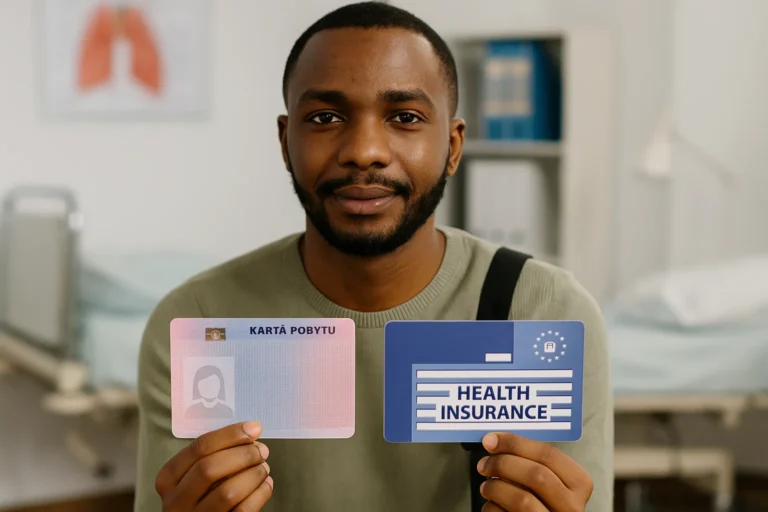
A sudden illness or accident can happen to anyone—including a foreign national staying in Poland. In such situations, it is crucial that the foreign national has a valid health insurance policy. Lack of insurance means not only bureaucratic hassles but, above all, enormous expenses that may exceed a person’s financial means. In 2025, Polish healthcare regulations and practices clearly indicate that health insurance is an indispensable part of a safe stay in the country. Find out how health insurance for foreigners in Poland works in emergency situations and what benefits it covers.
Why is health insurance mandatory?
The Polish healthcare system is based on two pillars—the public National Health Fund (NFZ) system and the private sector. For Polish citizens, the NFZ system is financed by health insurance premiums. Foreigners, on the other hand, must be eligible for this system—for example, through employment, studies, or a special international agreement—in order to receive care.
In practice, this means that:
- A foreigner employed in Poland is covered by the National Health Fund (NFZ),
- A student may enroll in the National Health Fund (NFZ) voluntarily,
- A tourist or short-term visitor must have private insurance (most often medical expense insurance—KL).
Without a valid insurance policy, the patient must cover all medical expenses out of pocket. Even a short hospital stay—for example, due to an appendectomy or a broken limb—can result in bills running into the thousands of zlotys. The Polish government therefore requires that foreign nationals have health insurance—regardless of the length of their stay.
What types of emergencies are covered by the policy?
The scope of coverage depends on the type of insurance selected, but under the vast majority of policies, a foreign national is entitled to benefits in situations such as:
- sudden illnesses (e.g., infections, poisoning, acute pain),
- traffic accidents and other mechanical injuries,
- the need for hospitalization,
- emergency surgical procedures,
- emergency medical care,
- ambulance transport or medical transport to the country of origin,
- Rehabilitation following a medical emergency (in select packages).
As a result, a foreigner is not left to face a medical emergency alone and can count on immediate assistance without worrying about exorbitant costs.
Public Health Insurance Fund vs. Private Insurance Policies
The difference between the National Health Fund (NFZ) and private insurance policies is significant and affects the quality of care.
- NFZ – It provides a full range of health care services, but the foreign national must be registered with the system. Wait times for specialists can be long, which may make it difficult to access prompt care in emergencies.
- Private Health Insurance – It typically includes immediate assistance in emergencies, rapid diagnostics, and service in foreign languages. This is the solution most often chosen by foreigners staying in Poland.
- Medical Expense Insurance (KL) – Required for visas and short-term stays. It is primarily intended for emergencies, covering medical treatment, hospitalization, and transportation.
You can read more about the formal requirements here: KL Health Insurance for Foreigners – What Is It and When Is It Required?.
What happens in practice in the event of an emergency?
If a foreign national is admitted to a hospital with a medical emergency, the medical staff verifies his or her insurance policy.
- Policy is valid and active – Medical expenses are covered by the insurer. Foreigners don’t have to worry about bills and can focus on their treatment.
- No insurance policy – The hospital bills the patient directly. In the case of major surgery or a prolonged hospital stay, the amounts can range from several thousand to several tens of thousands of zlotys.
That is why it is so important to always have your policy document with you—whether in paper or electronic form. More and more insurance companies are offering mobile apps that provide access to policy details and instructions on what to do in the event of an emergency.
How do you choose a policy that actually provides protection?
Not every policy guarantees complete protection. When choosing a policy, you should pay attention to several key factors:
- Does it cover emergency treatment,
- Does it provide hospitalization and surgical procedures,
- Does it include medical transport and rescue operations,
- What is the sum insured (a minimum of 30,000 EUR is required for visas and residence permits),
- Does it offer additional services, such as rehabilitation or telemedicine?.
You'll find proven solutions here: Health Insurance for Foreigners in Poland.
Why is a quick response so important?
In emergencies, response time can mean the difference between health and, sometimes, even life itself. With a valid insurance policy, a foreign national can count on immediate assistance without having to explain their financial situation. This sense of security is of immense importance, especially for people living far from their families and home countries.
Example: A foreign national traveling in Poland is involved in a traffic accident. With a valid KL policy, he is transported by ambulance to the hospital, undergoes surgery, and is hospitalized. The insurer covers the entire cost. Without insurance, the bill would amount to tens of thousands of zlotys.
Why does a private insurance policy offer greater peace of mind?
Although the National Health Fund (NFZ) provides basic health care, many foreigners choose to purchase private insurance policies for several reasons:
- shorter wait times and quick access to specialists,
- service in foreign languages,
- access to modern forms of treatment and rehabilitation,
- the option of online consultations (telemedicine),
- a broader scope of coverage that also includes preventive care.
As a result, even people who are formally covered by the National Health Fund (NFZ) often purchase an additional private insurance policy for peace of mind.
What are the consequences of not having insurance?
Lack of health insurance in Poland has serious consequences:
- refusal to issue or extend a visa,
- rejection of a residence card application,
- inability to use NFZ health care services,
- enormous medical expenses paid out of pocket.
Medical bills can ruin the budget of a foreigner and his or her family. That is why the Polish government consistently requires insurance, and hospital practices confirm that a policy is essential.
Related Formal Issues
Health insurance is not only about protecting one's health, but also a key component of administrative procedures.
You can read more about this here:
- Health Insurance for Foreigners in Poland – Who Is Required to Have It and How Can You Get It?
- Health Insurance for Foreigners – What You Should Know Before Arriving in Poland.
Medical emergencies are situations in which every minute and every detail counts. Health Insurance for Foreigners in Poland In 2025, it is not only a formal requirement but also a real safeguard for one’s health and finances. A properly selected insurance policy gives a foreign national the assurance that, in the event of a sudden illness or accident, they will receive the necessary assistance without financial risk.
When choosing a policy, it’s important to consider not only the price, but above all the scope of coverage and the sum insured. This gives foreign nationals security, peace of mind, and the opportunity to focus on their lives in Poland without worrying about the future.





 Polish
 English
 Ukrainian
 Spanish
 Turkish
 Russian
 Vietnamese
 Indonesian